Kalonji for Hair: Traditional Uses, Benefits and How to Use It
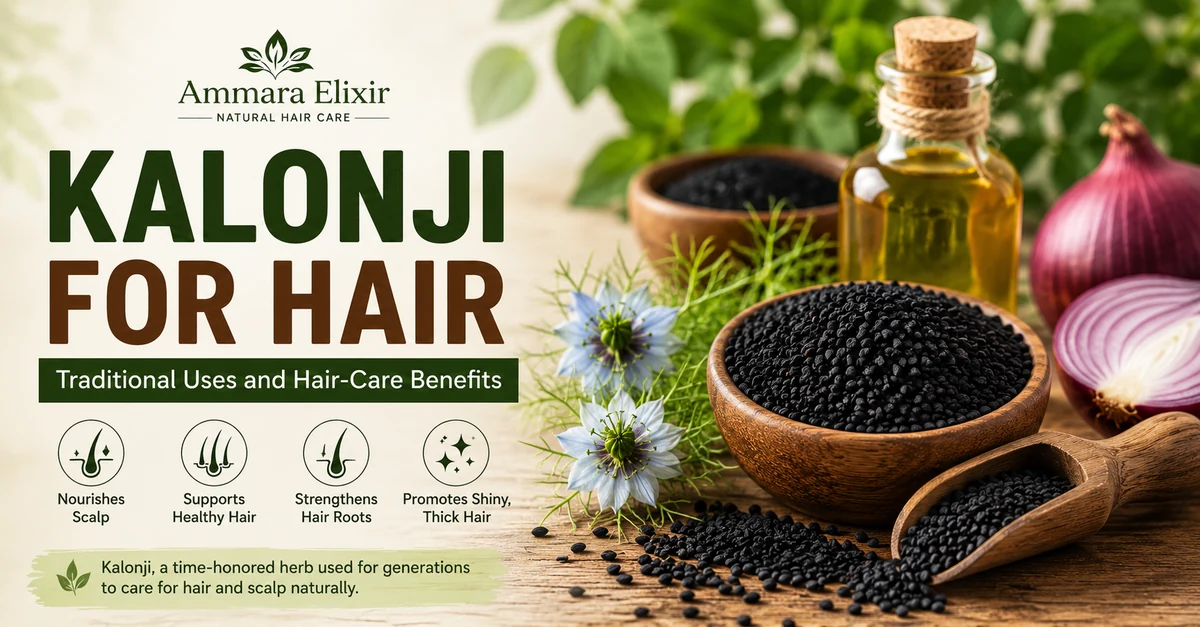
Kalonji, commonly known as black seed, has been used traditionally in cooking, wellness practices, and personal care for generations. These small black seeds are also a popular ingredient in traditional South Asian and herbal hair-care routines.
Many people are interested in kalonji for hair because of its long history of use in natural hair-care preparations. It is commonly found in herbal hair oils and is often combined with other traditional ingredients.
But how is kalonji actually used for hair and scalp care? What are its traditional benefits, and how can you include it in your hair-care routine?
In this guide, we explore kalonji, its traditional uses for hair, ways to use it, and what you should know before adding it to your routine.
What Is Kalonji?
Kalonji is the common South Asian name for the small black seeds of Nigella sativa. It is also commonly called black seed.
Kalonji has a distinctive black appearance and a strong, aromatic character. The seeds are widely used as a culinary ingredient, particularly in South Asian and Middle Eastern cuisines.
Beyond cooking, kalonji has a long history of traditional use in personal-care practices, including hair and scalp care.
Kalonji can be used as whole seeds or incorporated into oils and other preparations.
Why Is Kalonji Used for Hair?
Kalonji is traditionally included in hair-care preparations because of its natural plant compounds and its long-standing place in traditional personal care.
It is commonly incorporated into herbal hair oils and other preparations intended to complement a regular hair and scalp-care routine.
Traditional uses of kalonji in hair care include:
- Supporting a healthy-looking scalp
- Helping hair feel conditioned
- Supporting a regular hair-care routine
- Providing a botanical ingredient in herbal hair oils
- Complementing other traditional hair-care ingredients
However, traditional use should not be confused with medical treatment. Kalonji should not be considered a guaranteed cure for hair loss, baldness, alopecia, or other medical scalp conditions.
Kalonji for Scalp Care
Healthy-looking hair starts with proper care of the scalp as well as the hair itself.
Regular cleansing, gentle handling, and choosing products appropriate for your hair and scalp are important parts of a good hair-care routine.
Kalonji is traditionally used in scalp-care preparations, particularly herbal oils. When incorporated into a hair oil, it becomes one component of a routine designed to care for the scalp and hair.
Everyone's scalp is different, so the way a person responds to a particular ingredient or product can vary.
If you have sensitive skin or a sensitive scalp, it is always sensible to introduce a new product carefully.
Traditional Ways to Use Kalonji for Hair
There are several ways kalonji can be incorporated into a traditional hair-care routine.
1. Kalonji in Herbal Hair Oil
One of the most common ways kalonji is used for hair care is through herbal hair oil.
Kalonji can be combined with a suitable carrier oil and other botanical ingredients to create a traditional oil preparation.
The oil can then be gently massaged into the scalp and applied through the hair as part of a regular hair-oiling routine.
Using a ready-made herbal hair oil can also be more convenient than preparing individual ingredients at home.
2. Kalonji Oil
Black seed oil is another preparation associated with traditional personal care.
Depending on the formulation, it may be used as part of a hair-oiling routine. When purchasing a product containing kalonji or black seed oil, it is important to check the ingredient information and follow the manufacturer's recommended instructions.
3. Kalonji as Part of a Herbal Formula
Traditional hair oils often contain several ingredients rather than relying on one ingredient alone.
Kalonji may be combined with carrier oils and other botanical ingredients to create a complete herbal hair-care formulation.
This approach allows different traditional ingredients to be incorporated into one convenient product.
How to Use Kalonji Hair Oil
If you are using a hair oil containing kalonji, a simple hair-oiling routine can help you incorporate it into your regular hair care.
- Apply the oil: Start with a moderate amount of hair oil and apply it gently to your scalp.
- Massage your scalp: Use your fingertips to gently massage the oil into the scalp. Avoid scratching or rubbing the scalp aggressively.
- Apply to the hair: Distribute the remaining oil through the lengths of your hair.
- Leave the oil on: Leave the oil on according to the instructions provided with the product.
- Wash your hair: Wash your hair with a suitable shampoo.
The amount of oil and frequency of use can vary depending on your hair type, scalp type, lifestyle, and the particular formulation you are using.
Kalonji in Ammara Elixir Herbal Hair Oil
Kalonji is one of the traditional ingredients used in Ammara Elixir Herbal Hair Oil.
The formulation combines kalonji with other traditional ingredients, including:
- Mustard oil
- Methi dana
- Ginger
- Onion
Bringing multiple traditional ingredients together provides a convenient way to incorporate them into a regular hair-oiling routine.
Rather than preparing individual ingredients at home, a ready-made herbal formulation allows you to follow a simpler and more convenient hair-care routine.
Kalonji and Hair Growth: What Should You Know?
Kalonji is frequently discussed online in relation to hair growth.
However, it is important to distinguish between traditional hair-care practices and proven medical treatments.
Using kalonji in a hair-care routine does not guarantee new hair growth or prevent every type of hair loss.
Hair loss can have many different causes, including:
- Genetics
- Hormonal changes
- Nutritional factors
- Stress
- Certain medications
- Medical conditions
- Age-related changes
For this reason, persistent, sudden, or significant hair loss should not be attributed to a single cause without appropriate evaluation.
Kalonji can be viewed as a traditional hair-care ingredient rather than a guaranteed medical treatment for hair loss.
How Often Should You Use Kalonji Hair Oil?
There is no universal schedule for using kalonji hair oil.
The appropriate frequency can depend on:
- Your hair type
- Your scalp type
- Your lifestyle
- How frequently you wash your hair
- The formulation of the hair oil
- Your personal hair-care routine
If you are using a commercial hair oil, follow the recommended directions on the product.
Some people prefer oiling their hair as part of a weekly routine, while others may use hair oil according to their individual needs.
The most important thing is to choose a routine that feels comfortable for your hair and scalp.
Kalonji for Different Hair Types
Different hair types can require different approaches to hair care.
Dry Hair
People with dry hair may include oiling in their routine to help their hair feel softer and more conditioned.
A suitable amount of herbal hair oil can be applied to the scalp and lengths of the hair before washing.
Normal Hair
People with relatively normal hair may use kalonji-containing hair oil as part of a simple maintenance routine.
The frequency can depend on personal preference and the product's instructions.
Oily Scalp
People with an oily scalp may prefer using smaller amounts of oil.
Applying too much oil may make the hair feel heavy or greasy, so finding the right amount for your scalp is important.
Sensitive Scalp
If you have a sensitive scalp, introduce a new product carefully.
Testing a small amount first can help you determine how your skin responds to the product.
If irritation, redness, itching, or discomfort occurs, discontinue use.
Is Kalonji the Same as Black Seed?
Yes.
Kalonji is commonly known as black seed and refers to the seeds of Nigella sativa.
Different regions and products may use different names, which can sometimes cause confusion.
When purchasing a product, checking the ingredient list can help you understand exactly what is included.
Frequently Asked Questions
Is kalonji good for hair?
Kalonji has a long history of traditional use in hair and scalp-care preparations. It is commonly incorporated into herbal hair oils and other personal-care routines.
Is kalonji the same as black seed?
Yes. Kalonji is commonly known as black seed and refers to the seeds of Nigella sativa.
Can kalonji be used in hair oil?
Yes. Kalonji is traditionally incorporated into herbal hair oils either as an ingredient or as part of a prepared oil formulation.
Can kalonji help with hair growth?
Kalonji should not be considered a guaranteed hair-growth treatment. Hair growth and hair loss can be affected by many factors, and persistent hair loss may require professional evaluation.
How do I use kalonji hair oil?
Apply a suitable amount to the scalp, gently massage it into the scalp, and distribute the remaining oil through your hair. Leave it according to the product instructions and wash your hair afterward.
How often should I use kalonji hair oil?
The appropriate frequency depends on your hair type, scalp type, and the particular formulation. Follow the product's recommended directions and adjust your routine according to how your hair and scalp respond.
Can kalonji be combined with other herbal ingredients?
Yes. Traditional herbal hair oils often combine kalonji with carrier oils and other botanical ingredients.
Final Thoughts
Kalonji has been part of traditional personal-care practices for generations and remains a popular ingredient in herbal hair-care products.
It can be incorporated into hair oils and other preparations as part of a regular hair and scalp-care routine.
For people interested in herbal hair care, understanding individual ingredients can help them make more informed choices about the products they use.
Kalonji is one traditional ingredient that can be combined with other botanical ingredients to create a convenient hair-care formulation.
As with any hair-care product, consistency, gentle application, and choosing a routine that suits your individual hair and scalp are important parts of maintaining healthy-looking hair.
Order Ammara Elixir Today
Fill in your details below and we'll deliver right to your doorstep. Cash on Delivery available.