Mustard Oil for Hair: Benefits, Uses & Hair Care Guide
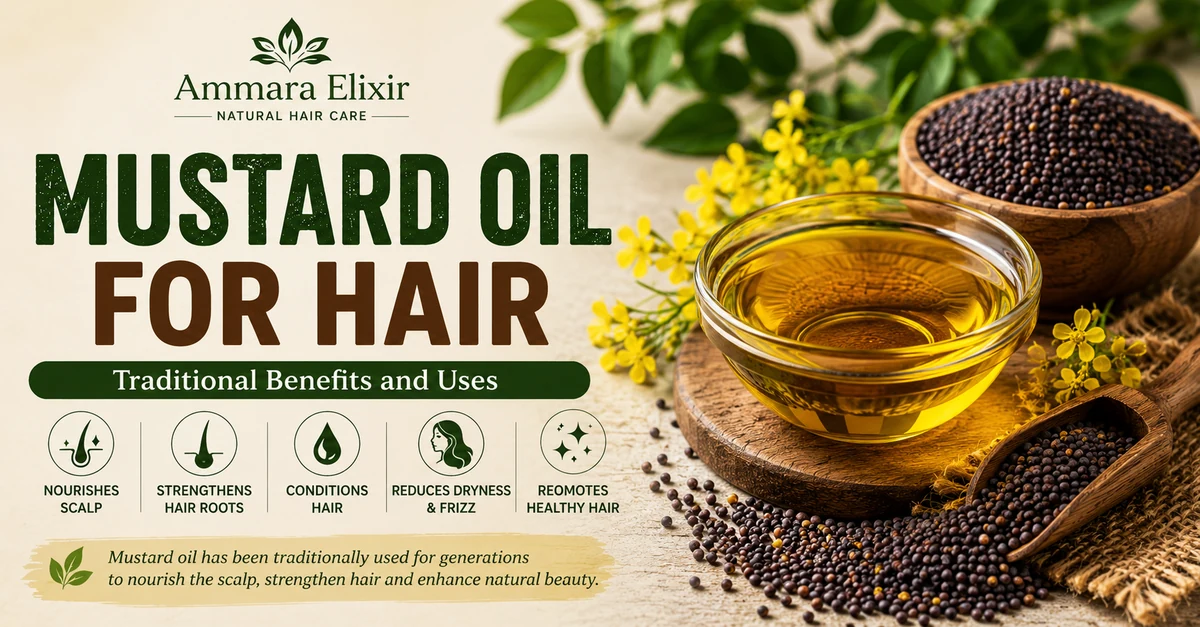
Mustard oil has been used traditionally in South Asian hair-care routines for generations. Known for its distinctive aroma and rich texture, mustard oil is commonly used for scalp massage, hair oiling and traditional herbal hair preparations.
In many households, hair oiling is an important part of maintaining healthy-looking hair. Mustard oil is one of the traditional oils used for this purpose and is often combined with other botanical ingredients to create herbal hair oils.
But what makes mustard oil popular for hair? How should it be used, and what role can it play in a regular hair-care routine?
This guide explores the traditional uses of mustard oil for hair and scalp care and explains simple ways to incorporate it into your routine.
What Is Mustard Oil?
Mustard oil is an oil extracted from mustard seeds. Mustard plants belong to the Brassica family and are widely cultivated in different parts of the world.
Mustard seeds have been used in cooking and traditional practices for centuries. The oil produced from these seeds has also become a popular ingredient in traditional body and hair-care routines.
Mustard oil has a distinctive smell and a rich texture, which makes it particularly popular for traditional scalp massages and hair oiling.
Why Is Mustard Oil Used for Hair?
Mustard oil has a long history of traditional use in hair care.
It is commonly used as a hair oil because it can be massaged into the scalp and applied to the lengths of the hair. Its rich texture also makes it suitable for people who enjoy oiling their hair before washing.
Traditional hair-care routines may use mustard oil to:
- Condition the hair
- Keep hair feeling soft
- Support a healthy-looking scalp
- Complement scalp massage
- Reduce the dry feeling of hair
- Provide a traditional oiling treatment
However, traditional use should not be confused with a medical treatment. Mustard oil should not be considered a guaranteed cure for hair loss, baldness or other scalp conditions.
Mustard Oil for Scalp Care
The scalp is an important part of any hair-care routine.
A clean and well-maintained scalp can help create a good environment for healthy-looking hair. Regular cleansing, gentle massage and choosing suitable hair-care products are all useful parts of maintaining the scalp.
Mustard oil is traditionally used for scalp massage. Applying a suitable amount of oil and gently massaging the scalp can make hair oiling a relaxing part of a personal-care routine.
It is important to avoid aggressive rubbing or scratching, particularly if the scalp is sensitive.
Traditional Benefits of Mustard Oil for Hair
Mustard oil has several traditional uses in hair care.
Helps Condition Hair
Oil can help coat the hair shaft, making the hair feel smoother and more manageable.
Mustard oil is traditionally used before washing the hair as part of an oiling routine.
Supports a Healthy-Looking Scalp
Regular scalp care is an important part of maintaining healthy-looking hair.
Mustard oil can be incorporated into a scalp-massage routine, providing a traditional approach to caring for the scalp.
Helps Hair Feel Softer
Dry-feeling hair can often benefit from appropriate conditioning and oiling.
Applying a suitable amount of mustard oil before washing may help the hair feel softer and less dry.
Complements Hair Massage
Hair oiling is often combined with gentle scalp massage.
Using the fingertips to massage the scalp can make the oiling process more comfortable and relaxing while helping distribute the oil evenly.
Works Well in Herbal Hair Formulations
Mustard oil is commonly used as a base or carrier oil in traditional herbal hair preparations.
It can be combined with ingredients such as methi dana, kalonji, ginger and onion to create a multi-ingredient herbal hair oil.
How to Use Mustard Oil for Hair
Using mustard oil does not need to be complicated.
A simple traditional hair-oiling routine can be followed before washing your hair.
Step 1: Prepare the Oil
Take a suitable amount of mustard oil based on the length and thickness of your hair.
Avoid using excessive amounts because too much oil can make the hair difficult to wash.
Step 2: Apply to the Scalp
Apply the oil gently to the scalp using your fingertips.
Try to distribute the oil evenly rather than applying a large amount to one area.
Step 3: Massage Gently
Massage the scalp using your fingertips for a few minutes.
Avoid scratching the scalp with your fingernails.
Step 4: Apply to the Hair
After applying the oil to the scalp, distribute the remaining oil through the lengths of your hair.
Pay particular attention to areas that feel dry.
Step 5: Wash the Hair
Leave the oil on according to your preferred routine or the instructions of the product you are using.
Then wash your hair thoroughly with a suitable shampoo.
Mustard Oil and Hair Growth
Mustard oil is often discussed online as a natural solution for hair growth.
It is important, however, to distinguish between traditional hair-care practices and scientifically established treatments.
Mustard oil can be used as part of a hair-care routine, but it should not be presented as a guaranteed treatment for hair growth or baldness.
Hair growth can be influenced by many factors, including genetics, age, hormones, nutrition, stress and overall health.
If someone experiences persistent or significant hair loss, identifying the underlying cause is more important than relying on a single hair-care ingredient.
Mustard Oil for Dry Hair
People with dry-feeling hair often include oiling in their hair-care routine.
Mustard oil has a rich texture and can be used before shampooing as part of a traditional pre-wash oiling routine.
Applying oil to the lengths of the hair can help the hair feel smoother and more conditioned.
However, the amount of oil should be adjusted according to your hair type. Using too much oil may leave some hair types feeling heavy or greasy.
Mustard Oil for Oily Hair
People with oily scalps may need a different approach.
If your scalp already produces a significant amount of natural oil, using a large amount of additional oil may make your hair feel excessively greasy.
In such cases, using a smaller amount and washing the hair properly afterward may be more comfortable.
There is no single hair-oiling routine that works for everyone.
Mustard Oil for Different Hair Types
Different hair types have different needs.
Dry Hair
Mustard oil can be used as part of a pre-wash oiling routine to help dry-feeling hair feel softer and more conditioned.
Normal Hair
People with normal hair can incorporate mustard oil into their routine according to their personal preference and hair-care needs.
Oily Hair
A smaller amount may be preferable for oily hair and scalp types.
Thick or Long Hair
People with thick or long hair may need more oil to distribute it evenly, but using too much is unnecessary.
The goal is to coat the hair appropriately rather than saturating it with oil.
Mustard Oil in Ammara Elixir Herbal Hair Oil
Mustard oil is one of the main traditional ingredients used in Ammara Elixir Herbal Hair Oil.
The formulation combines mustard oil with other traditional ingredients:
- Methi dana
- Kalonji
- Ginger
- Onion
This combination brings several traditional ingredients together in one convenient herbal hair-oiling formulation.
Instead of preparing individual ingredients at home, a ready-made herbal oil provides a simpler way to incorporate traditional hair oiling into a regular routine.
Mustard Oil vs. Other Hair Oils
There are many different oils used in traditional hair care.
Coconut oil, olive oil, almond oil and mustard oil are among the oils commonly associated with hair-care routines.
The best choice can depend on personal preference, hair type and how your scalp responds to the product.
Mustard oil is particularly popular in South Asian traditional hair care because of its long history of use and its rich texture.
How Often Should You Use Mustard Oil for Hair?
There is no universal answer to how often you should oil your hair.
Your ideal routine depends on your:
- Hair type
- Scalp type
- Hair length
- Lifestyle
- Washing routine
- Personal preference
Some people prefer oiling once a week, while others may use oil less frequently.
If you are using a ready-made hair oil, follow the recommended directions provided with the product.
Consistency is generally more important than using excessive amounts of oil.
Is Mustard Oil Safe for Everyone?
People can react differently to cosmetic and herbal ingredients.
Mustard oil may not be suitable for everyone, particularly people with sensitive skin or sensitivities to mustard.
If you are trying a mustard-oil product for the first time, consider testing a small amount on a limited area first.
Stop using the product if you experience significant irritation, redness, itching or discomfort.
Mustard oil should also be used externally according to the product's intended purpose.
Frequently Asked Questions
Is mustard oil good for hair?
Mustard oil has been traditionally used for hair and scalp care for generations. It is commonly used for scalp massage and pre-wash hair oiling.
Can mustard oil help hair growth?
Mustard oil should not be considered a guaranteed treatment for hair growth. Hair growth and hair loss can be affected by many different factors.
How do you use mustard oil for hair?
Apply a suitable amount to the scalp and hair, gently massage the scalp, leave it according to your routine or product instructions, and wash the hair thoroughly afterward.
Can I use mustard oil on my scalp?
Mustard oil is traditionally used for scalp massage. However, people with sensitive skin should introduce new products carefully and discontinue use if irritation occurs.
How often should I apply mustard oil to my hair?
The ideal frequency depends on your hair and scalp type. Many people include hair oiling as a weekly routine, but there is no universal schedule.
Can mustard oil be mixed with other herbal ingredients?
Yes. Mustard oil is commonly used as a base or carrier oil in traditional herbal hair formulations and can be combined with ingredients such as methi dana, kalonji, ginger and onion.
Is mustard oil suitable for dry hair?
Mustard oil can be incorporated into a pre-wash oiling routine for dry-feeling hair. The amount used should be appropriate for your hair type.
Final Thoughts
Mustard oil has a long history in traditional South Asian hair care and remains a popular ingredient in herbal hair-oiling routines.
It can be used on its own or combined with other traditional ingredients to create a more comprehensive hair-care formulation.
For people who enjoy herbal hair care, mustard oil can be part of a simple routine that includes gentle scalp massage, appropriate cleansing and regular hair maintenance.
Mustard oil is also one of the key traditional ingredients in Ammara Elixir Herbal Hair Oil, where it is combined with methi dana, kalonji, ginger and onion.
The most important part of any hair-care routine is choosing products that suit your hair and scalp and using them consistently and appropriately.
Order Ammara Elixir Today
Fill in your details below and we'll deliver right to your doorstep. Cash on Delivery available.